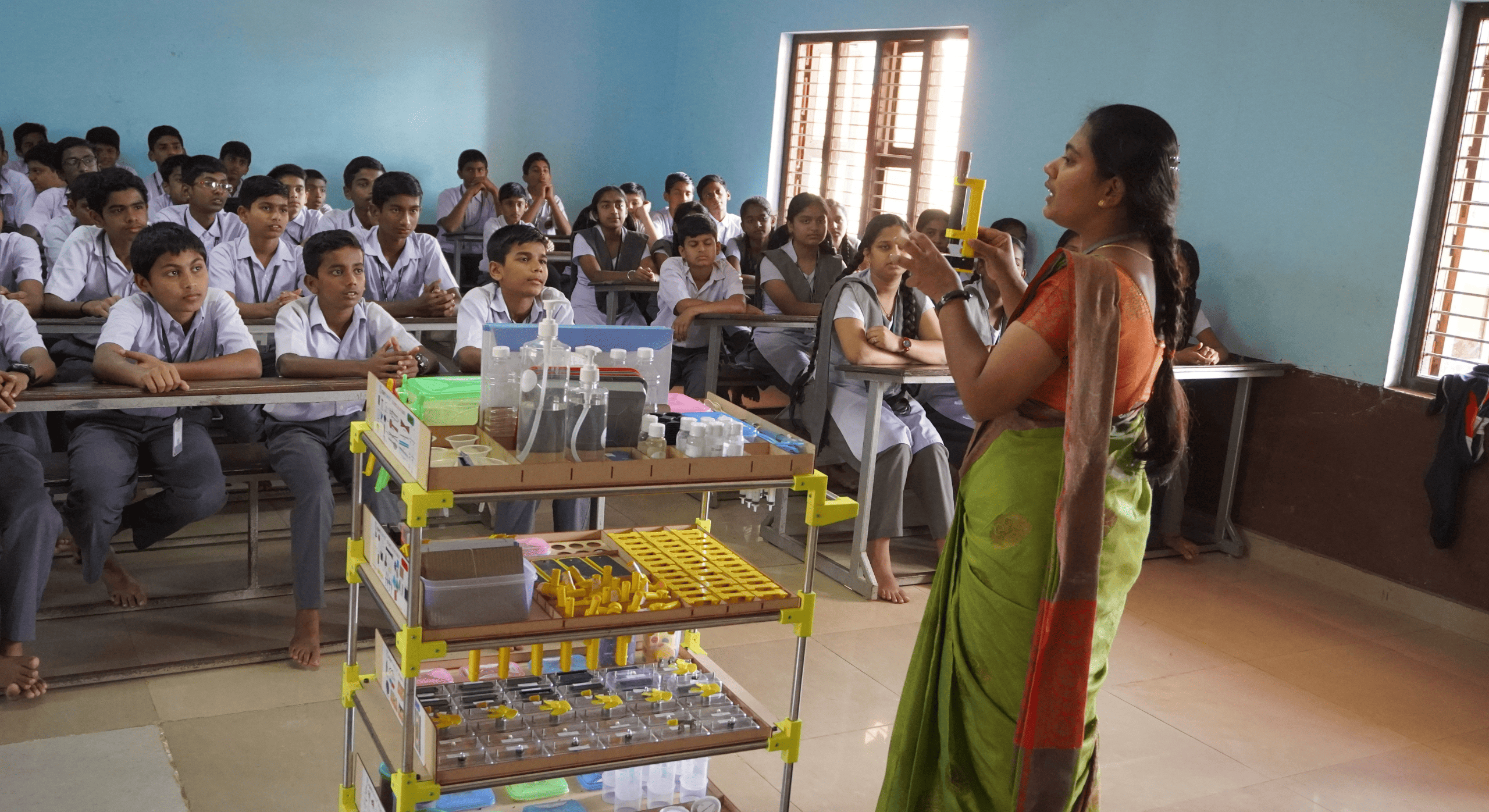
Walk into two schools today, and you might notice something interesting.
Both have smart boards.
Both have computer labs.
Both have internet access.
Yet one school feels innovative, while the other still struggles with disconnected systems, overwhelmed teachers, and technology that rarely goes beyond presentations.
The difference?
Technology alone doesn’t make a school future-ready.
A future-ready school uses technology to make learning better, teaching easier, and school operations smarter.
After speaking with school leaders across India, one thing has become clear:
The schools making the biggest impact aren’t necessarily spending the most on technology – they’re investing in the right systems.
Here are seven ways progressive school leaders are building technology-efficient campuses.
1. Think beyond smart classrooms
Installing digital screens is only the first step.
Ask yourself:
- Are students actively learning, or simply watching?
- Are teachers creating experiences or replacing a blackboard with a screen?
- Does technology encourage curiosity, collaboration, and problem-solving?
Technology should transform learning—not just modernise the classroom’s appearance.
2. Reduce teacher workload, not increase it
One of the biggest reasons technology initiatives fail is because they create more work for teachers.
The best school technology should help teachers:
- Plan lessons faster
- Access ready-to-use classroom resources
- Assess students efficiently
- Track progress without maintaining multiple spreadsheets
- Provide meaningful feedback in less time
When technology saves teachers time, adoption becomes natural.
3. Build one connected learning ecosystem
Many schools use separate tools for:
- Attendance
- Homework
- Assessments
- Learning resources
- Communication
- Reports
The result?
Teachers constantly switch between platforms.
Students have inconsistent experiences.
School leaders struggle to get meaningful insights.
Instead of adding more software, focus on creating one connected ecosystem where teaching, learning, assessments, and reporting work together.
4. Use data to improve learning – not just reporting
Every assessment generates valuable information.
The question is:
Are you using it?
Future-ready schools don’t collect data simply for report cards.
They use it to identify:
- Learning gaps
- Students who need additional support
- Concepts that require reteaching
- Classroom engagement trends
- Teacher support requirements
Data becomes useful only when it helps educators make better decisions.
5. Prepare students for skills, not just exams
The workplace is changing rapidly. Employers increasingly value:
- Critical thinking
- Creativity
- Collaboration
- Communication
- Problem-solving
- Digital literacy
Technology should help students practise these skills through inquiry, projects, simulations, and real-world challenges – not just online worksheets.
6. Choose scalable technology
Schools often invest in tools that solve today’s problem but become difficult to manage as the school grows.
Before adopting any new platform, ask:
- Can it scale across grades?
- Is it easy for teachers to learn?
- Does it align with NEP 2020?
- Can it integrate with existing systems?
- Will it still be useful five years from now?
Technology should grow with your school, not become another system to replace.
7. Build a culture of continuous innovation
Technology doesn’t make schools innovative. People do.
The most successful schools encourage teachers to:
- Experiment with new teaching methods.
- Share successful classroom practices.
- Learn from one another.
- Attend professional development programmes.
- Use technology confidently rather than reluctantly.
When teachers feel supported, innovation becomes part of the school’s culture.
What does a future-ready school really look like?
A future-ready school isn’t defined by the number of devices it owns.
It’s a school where:
- Teachers spend more time teaching than managing paperwork.
- Students actively explore, question, and create.
- School leaders make decisions based on meaningful insights.
- Parents stay connected to learning.
- Technology works quietly in the background, making every process more effective.
That’s when digital transformation begins to create real educational impact.
How Xperimentor supports future-ready schools
At Xperimentor, we believe technology should simplify education – not complicate it.
Our digital ecosystem combines curriculum-aligned experiential learning, AI-powered assessments, teacher dashboards, student progress tracking, inquiry-based learning modules, multilingual content, and classroom-ready resources in one connected platform.
The result is a solution that supports everyone in the school ecosystem:
- Students learn through engaging, hands-on experiences.
- Teachers save time with ready-to-use resources and intelligent assessment tools.
- School leaders gain actionable insights into learning outcomes and classroom performance.
Rather than adding another isolated tool, Xperimentor helps schools build a connected ecosystem that supports quality teaching, measurable learning, and the vision of NEP 2020.